
Economic Infrastructure for the Real Asset Lifecycle
Golden Thread as Infrastructure (GTAI)
Institutional rules that execute with the asset, across its lifecycle.
P R O B L E MEvery lifecycle participant reconstructs what the last one produced
Real estate is the world’s largest asset class. It operates without shared memory or execution infrastructure. The decisions that define how an asset is developed, financed, operated and managed cannot travel intact across capital, ownership, operations and assets.
Every transition reconstructs what the last one produced. The mandate is diluted into a brief. The brief is re-interpreted as a design. The design becomes a contract. The contract becomes a static operational baseline. At every transition, conditions are re-established as if they never existed.
At disposal, due diligence reconstructs decades of asset decisions from fragmented records, because the asset itself carries no complete, verifiable execution history.
Every successive wave of technology adds intelligence to a system that has no way to act on it, because the medium of traditional real estate cannot retain, carry forward or build upon the decisions made throughout its lifecycle.
G O L D E N T H R E A DThe Golden Thread carries an asset's decisions and the governing basis behind them forward throughout its lifecycle.
The financial, legal, technical, operational and compliance requirements that define how an asset should be developed, financed, operated and managed are compiled into the asset and persist through ownership changes, development milestones, operational handovers and disposal.
What this means in practice
A fund manager defines the conditions that govern how an asset should perform. Those conditions continue to guide every investment, development and operational decision throughout the asset's life, evolving only through authorised change.
A developer submits evidence of a completed milestone. The proposal is evaluated against the agreed governing baseline before the milestone becomes part of the asset's approved position.
A lender monitors covenant compliance against the asset's continuously updated approved position, derived from verified evidence.
An operator manages the building against the technical, operational and regulatory conditions that already govern the asset, rather than recreating them from disconnected documents and systems.
A buyer at disposal inherits a complete lifecycle history together with the governing conditions that shaped every material decision.
S Y S T E MHow the System Works

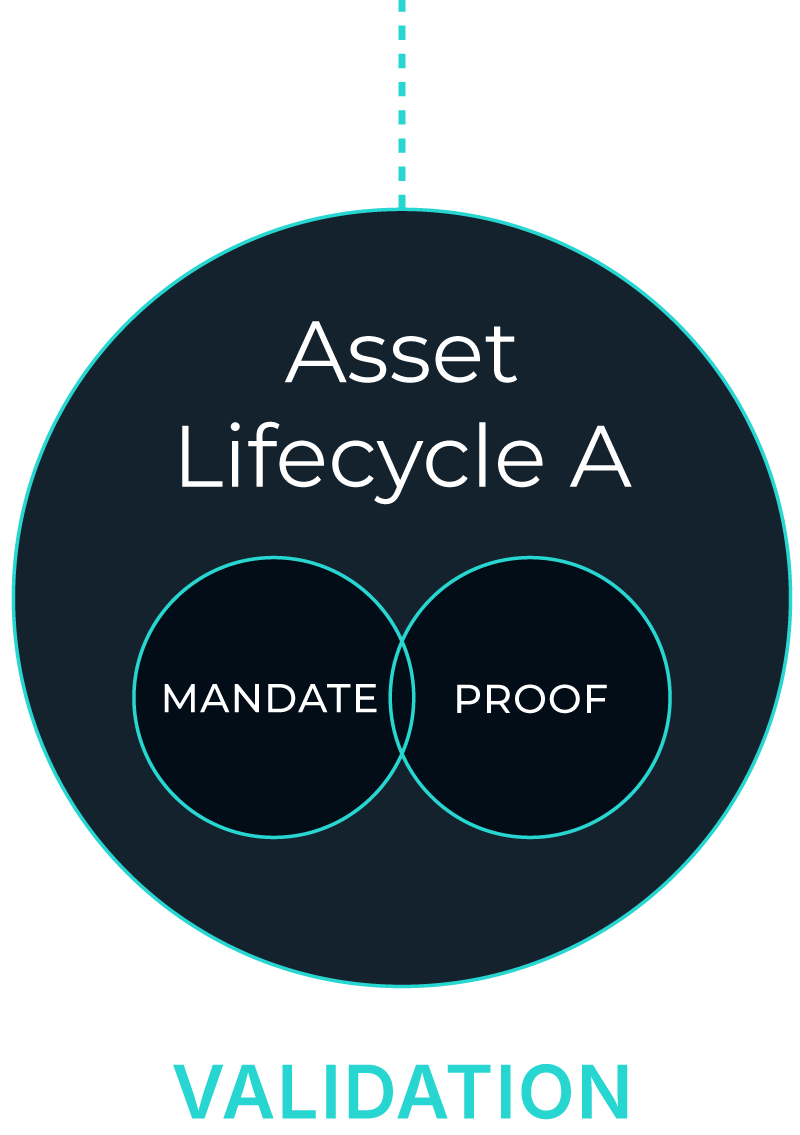
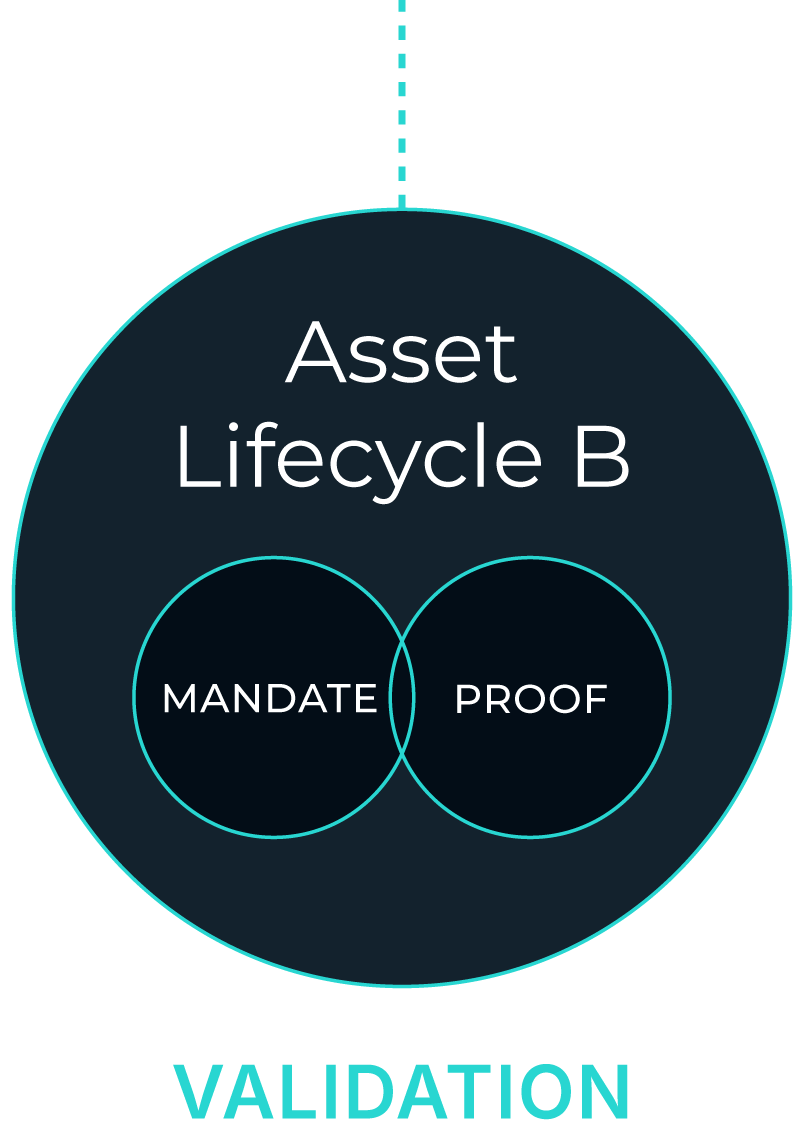
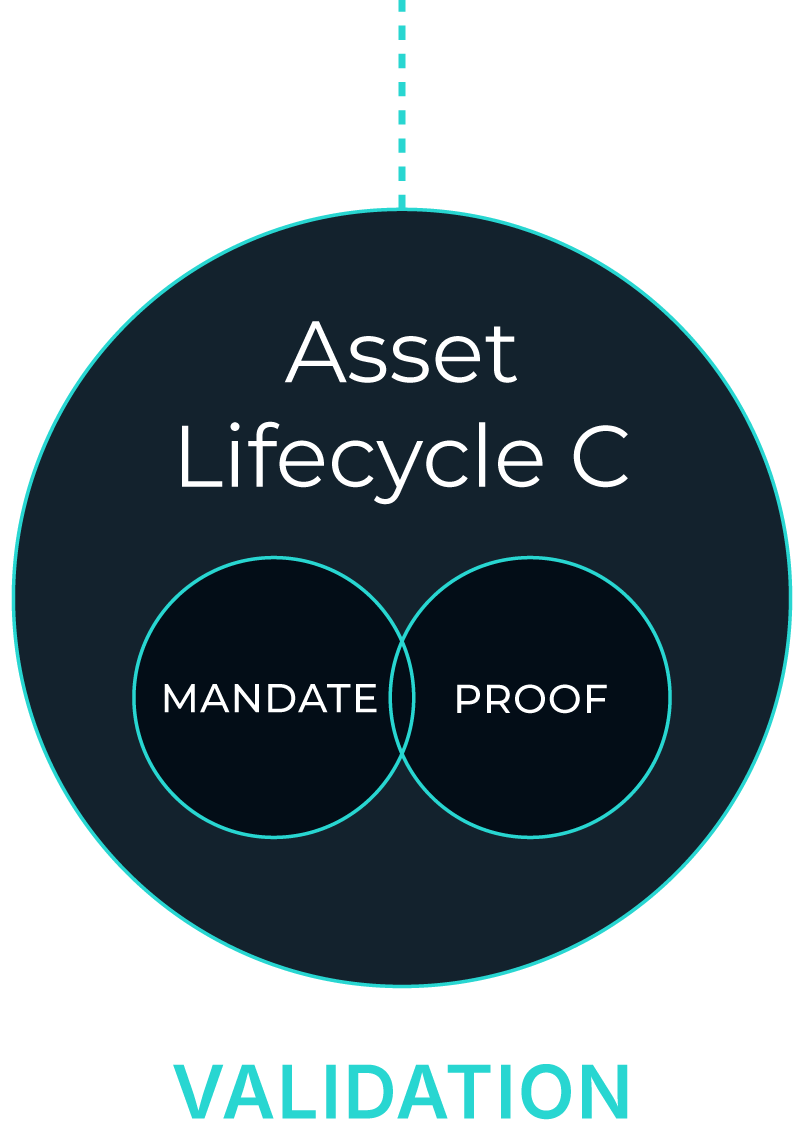
Three architectural responsibilities ensure that asset decisions remain consistent throughout the asset's lifecycle.
-
Every approved asset decision becomes part of the asset's continuing record, carrying the authority, evidence and decision basis on which it was made.
The record preserves what changed, who authorised it, the evidence that supported it and the basis on which the decision was made.
Each approved decision becomes the starting point for the next.
This is the Golden Thread.
-
Financial, legal, technical, operational and regulatory requirements are structured into one governing baseline against which every proposed asset change is evaluated.
Every participant evaluates decisions against the same governing baseline.
Changes occur only through authorised decisions supported by evidence.
-
Every proposed asset change follows the same path. It is verified, evaluated and if necessary, it is routed to the responsible authority.
When approved, it becomes part of the asset's continuing record and immediately forms the basis for future decisions.